EN
EN

Where to Buy Custom Ear Tags: An OEM Livestock Ear Tag Supplier Selection Guide
Across the agricultural supply accounts I've managed over the years, the question of where to source custom ear tags at scale comes up every procurement cycle—and the answer has shifted considerably as more operations move from local resellers toward direct factory sourcing. If you're a distributor building a private-label ear tag program, or a large ranch operation tired of paying reseller margins for a product you need by the thousands, this guide walks through the decision framework you actually need.
Before comparing prices, ask yourself: do you know what your current supplier's quality consistency looks like across batches? If you haven't audited more than a handful of tags from a given order, the answer is probably no. For a bulk custom ear tag program, that's exactly where procurement risk lives.
Why Source Custom Ear Tags Directly from an OEM Manufacturer?
The standard supply chain for personalized cattle ear tags runs: factory → regional distributor → agricultural retailer → you. Each link adds margin and removes a direct connection to the production source. For smaller operations buying two hundred tags a season, that structure works fine. For distributors managing accounts across multiple states, or operations tagging thousands of head per year, the economics shift.
Factory-direct OEM procurement eliminates the distributor markup layer, gives you direct access to the production team for technical questions about applicator compatibility and format customization, and shortens the resolution path when a quality issue arises. For orders above a few thousand units, the total cost difference and quality control advantage from a direct OEM relationship more than offsets the extra coordination effort.
OEM manufacturers like BLUEWORTH (blueworthtags.com) specifically serve this buyer segment: distributors, large livestock operations, and agricultural retailers building private-label programs from a factory that focuses exclusively on animal identification products.
5 Criteria That Separate a Reliable OEM Ear Tag Supplier
1. Material Specifications
The most durable custom cattle tags are made from high-flexibility TPU (thermoplastic polyurethane) rather than standard rigid plastic. The key performance difference: TPU maintains flexibility in sub-zero temperatures, resisting the cracking and brittleness that causes standard tags to fail in northern climates. Reputable OEM suppliers can specify their TPU formulation—UV stabilizers and hydrolysis resistance are not default features. They must be built into the material formulation at the production stage. When evaluating a supplier, ask for their material spec sheet and whether UV-stabilized formulations are standard or a premium option.
2. Minimum Order Quantities and Flexibility
If your operation runs predictable seasonal tagging volumes, a higher MOQ from a direct manufacturer may not present a problem. But if you're building a distributor catalog or managing uneven demand cycles, you'll want to confirm whether a supplier offers flexible MOQ tiers across their standard product lines before committing. Some OEM manufacturers offer lower MOQ thresholds on standard non-custom lines, letting buyers evaluate quality before placing a fully branded order. Ask specifically how MOQ changes between blank stock, custom-imprinted, and fully private-label orders, as each typically falls into a different pricing tier.
3. Lead Time Transparency
Calving season does not wait. One of the consistent procurement failures across accounts I've serviced is placing an overseas custom ear tag order without confirming the full production-to-delivery timeline, then discovering the shipment arrives two weeks after the tagging window closes. Get lead times in writing, broken down by: sample production time, bulk production start, production completion, and shipping method options with estimated transit times. A supplier who cannot give you these numbers before the order is not a supplier you can plan around.
4. Customization Capability
Not all custom ear tag suppliers offer the same range of options. Baseline customization typically covers sequential numbering and a single background color. A capable OEM manufacturer will offer: custom logos, non-standard color matching (Pantone or RAL reference), bilingual printing, laser engraving and deep embossing, QR code integration for digital traceability, and custom packaging for distributor private-label programs. If your program requires any of the latter, confirm sample capability before the first bulk order—requesting a prototype for complex formats is standard practice, not a special request.
5. After-Sale Support and Quality Claims Process
I trusted our main ear tag supplier without question for years. It was not until we started auditing batch quality more systematically—comparing defect rates order over order—that we realized consistency had degraded without any obvious trigger. The lesson: a supplier's quality claims process matters as much as their initial product quality. Ask specifically how batch defect claims are handled, what documentation they require, and what the resolution path looks like. A manufacturer with production lot traceability can identify and respond to quality issues far more efficiently than one operating without it.
Common Traps When Ordering Custom Ear Tags in Bulk
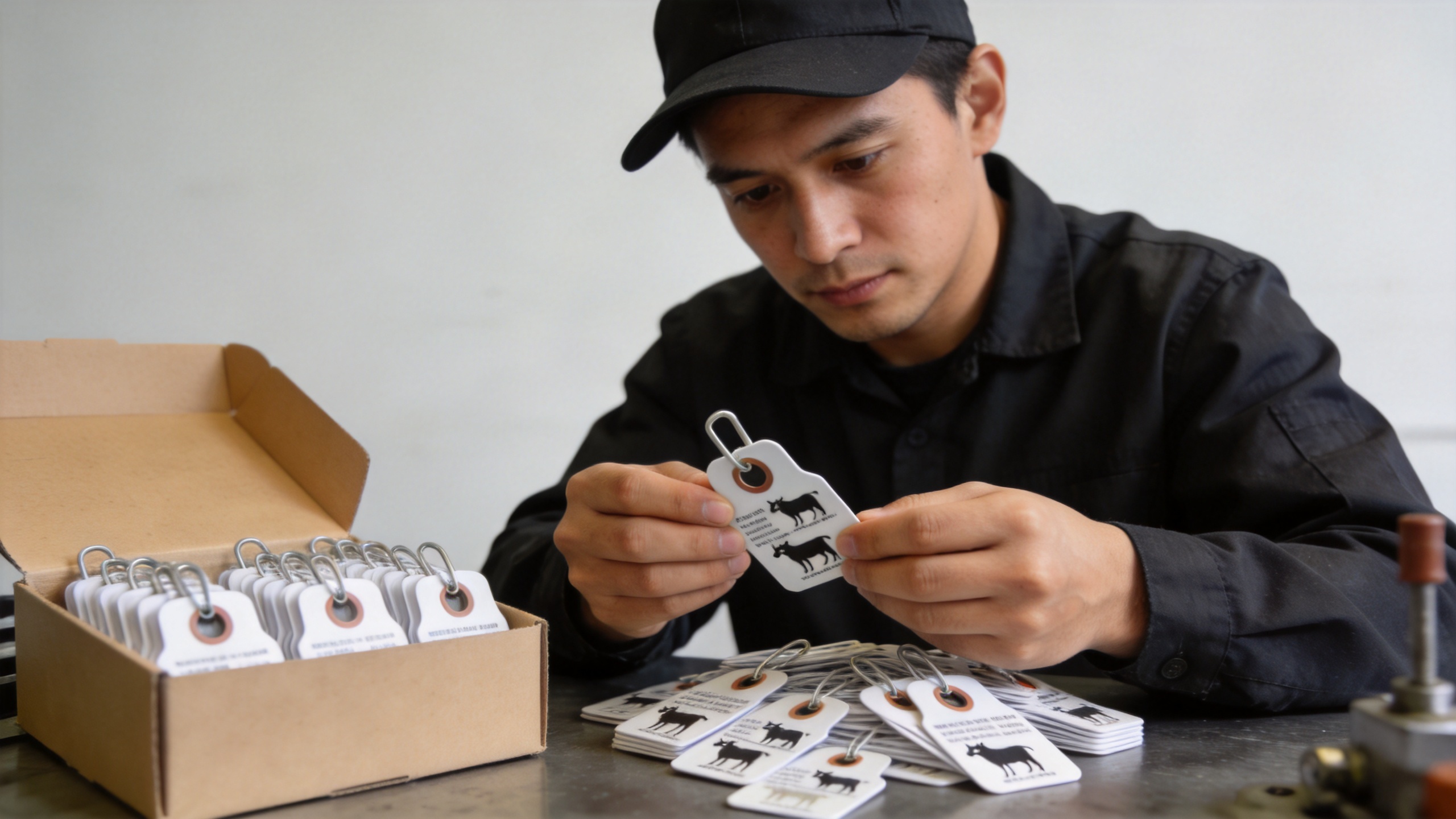
- Skipping the sample stage. Ordering a bulk run from a new supplier without a physical sample is the fastest path to an unusable order. A reputable OEM manufacturer will offer a sample or prototype program; one that pushes back on sampling before commitment is a risk signal.
- Assuming applicator compatibility. We ordered a large batch of custom cattle tags from a new supplier. About a fifth of the batch had hole-size inconsistencies that jammed our existing applicator. Confirm compatibility with your current equipment before bulk production—not after the pallet arrives on-farm.
- Ignoring landed cost. Quoted unit price from an overseas manufacturer rarely represents your actual procurement cost. Get a full breakdown including freight, customs, and insurance charges before comparing quotes against domestic alternatives. A lower quoted unit price can easily flip when the full landed cost is calculated.
- Not specifying print durability in writing. "Custom-printed" can mean anything from a surface-applied ink that fades within a season to a laser-processed number that remains readable for the life of the animal. Define your readability requirement explicitly at the order stage and confirm it is addressed in the production spec.
How an OEM Ear Tag Program Works in Practice
For distributors and large operations establishing a first OEM relationship, the process typically moves through four stages:
- Specification and sample request. Submit format requirements—tag size, color, numbering range, logo files—and request physical samples to verify print quality and applicator fit before production begins.
- Prototype review. Review samples against your specification. For custom logo or non-standard format orders, this stage reduces the risk of print or dimensional errors carrying into the bulk run. A manufacturer with a defined design review service will flag problems before they reach production.
- Bulk production and quality inspection. A manufacturer with outgoing QC documentation will provide an inspection report per batch covering dimensional tolerances and print quality. Request this as a condition of your order—it gives you the documentation you need for your own internal procurement files.
- Ongoing relationship and color consistency. If you are running a color-coded herd management system across multiple seasons, Pantone or RAL color matching on reorders ensures consistency. Keep your own batch quality records across orders to monitor any drift in material or print performance over time.
Products to Evaluate from BLUEWORTH
BLUEWORTH manufactures a range of visual identification tags for both standard herd management and larger OEM programs. Two current options worth requesting samples of:
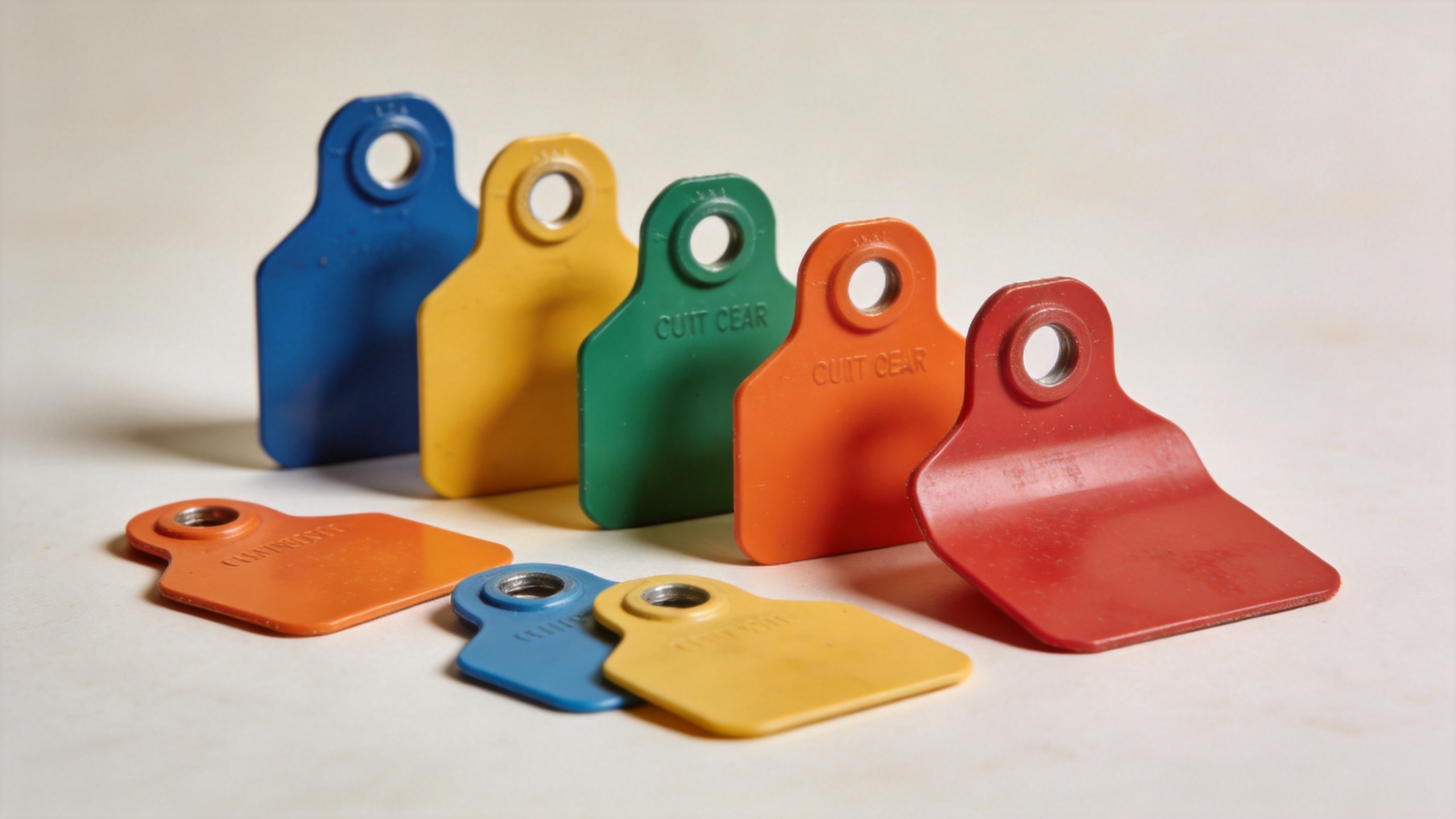
- Blank Super Maxi Size Two-piece Cow Ear Tag — 11 colors: A large-format two-piece blank tag in 11 standard colors, suitable as a base for custom imprinting programs or high-visibility herd segmentation.
- TPU Animal Ear Tag: Made from flexible TPU material, providing the cold-weather performance and retention durability discussed above. A practical starting point for evaluating material quality before committing to a custom imprinting program.
Inquiries about OEM programs, MOQ tiers, sample requests, and private-label options can be initiated through blueworthtags.com or via the verified B2B channel at blueworth.en.alibaba.com.
Making the Sourcing Decision
Choosing where to buy custom ear tags at scale is a total-cost-of-ownership decision, not a unit-price comparison. Factor in expected tag retention rate, replacement labor cost per re-tagged animal, the value of documentation continuity in your herd records, and your risk tolerance for batch inconsistency before signing off on a new supplier relationship.
If you are evaluating OEM manufacturers for personalized cattle ear tags or building a distributor program with custom cattle tags, the five criteria above provide a structured comparison framework. A direct conversation with the manufacturer—asking specifically about batch QC documentation, prototype review process, and after-sale claims handling—will tell you more about supplier reliability than any spec sheet or catalog listing.