EN
EN
Scrapie Ear Tags for Goats: US Compliance Requirements and Where to Buy
Sourcing scrapie tags for goats is not as straightforward as ordering standard livestock ear tags. The USDA Scrapie Eradication Program sets specific requirements for what qualifies as official identification, and using a tag that falls outside those requirements can cause real problems when moving animals across state lines. Animals carrying non-approved tags can be turned back at livestock markets, and documentation gaps created this way are hard to fix retroactively.
Which ear tags actually count as official scrapie tags for goats? Not all plastic livestock tags qualify. This guide covers the identification requirements, the physical standard that separates compliant tags from non-compliant ones, and where to source approved options for your operation.
What Is the US Scrapie Identification Requirement for Goats?
Scrapie is a fatal, degenerative disease affecting the nervous systems of sheep and goats. To support traceability and disease eradication, USDA's Animal and Plant Health Inspection Service (APHIS) administers a national identification program. Under the USDA Scrapie Final Rule, effective April 24, 2019, official identification is required for:
- All sheep and goats 18 months of age or older
- All sexually intact sheep and goats under 18 months of age
- Any animal moving in interstate commerce, including to slaughter channels, livestock exhibitions, and sale barns
The rule covers both sheep and goats. Wethers (castrated males) under 18 months in slaughter channels may qualify for an exemption under certain conditions. Dairy goat farms with interstate breeding stock movement generally need compliance across the full production herd. Closed herds with no interstate movement may face different requirements; checking current state and federal rules for your specific situation is still the right first step.
Producers who begin managing scrapie tags for goats consistently tend to find that the identification record itself earns its keep beyond compliance. A complete tag record supports traceability claims, makes veterinary visits more efficient, and reduces paperwork at state checkpoints.
What Makes a Scrapie Tag Official?
Under APHIS guidelines, identification devices including ear tags and injectable transponders must be approved as sufficiently tamper-resistant. The tag must not be removable or reusable without visible evidence of tampering. That tamper-resistance requirement is what separates official scrapie tags for goats from standard livestock ear tags that happen to look similar.
Approved scrapie tags for goats and sheep fall into three main categories:
- Visual plastic tags: the standard option. These carry a Flock ID or Premises ID, state code, and individual animal number assigned through the USDA system. White is the default color, though some state programs issue specific colors for different movement categories. These are the most widely used sheep ear tags for official scrapie identification.
- EID (Electronic Identification) tags: visual panel tags with an embedded transponder. They add traceability depth and are increasingly adopted in commercial operations, though per-unit cost is higher than visual-only options. Programs like Australia's sheep NLIS (National Livestock Identification System) rely heavily on EID-based tags, offering a reference point for producers evaluating longer-term traceability investments.
- Metal tags: permitted in some cases, with preferred placement in the left ear approximately one-third from the head.
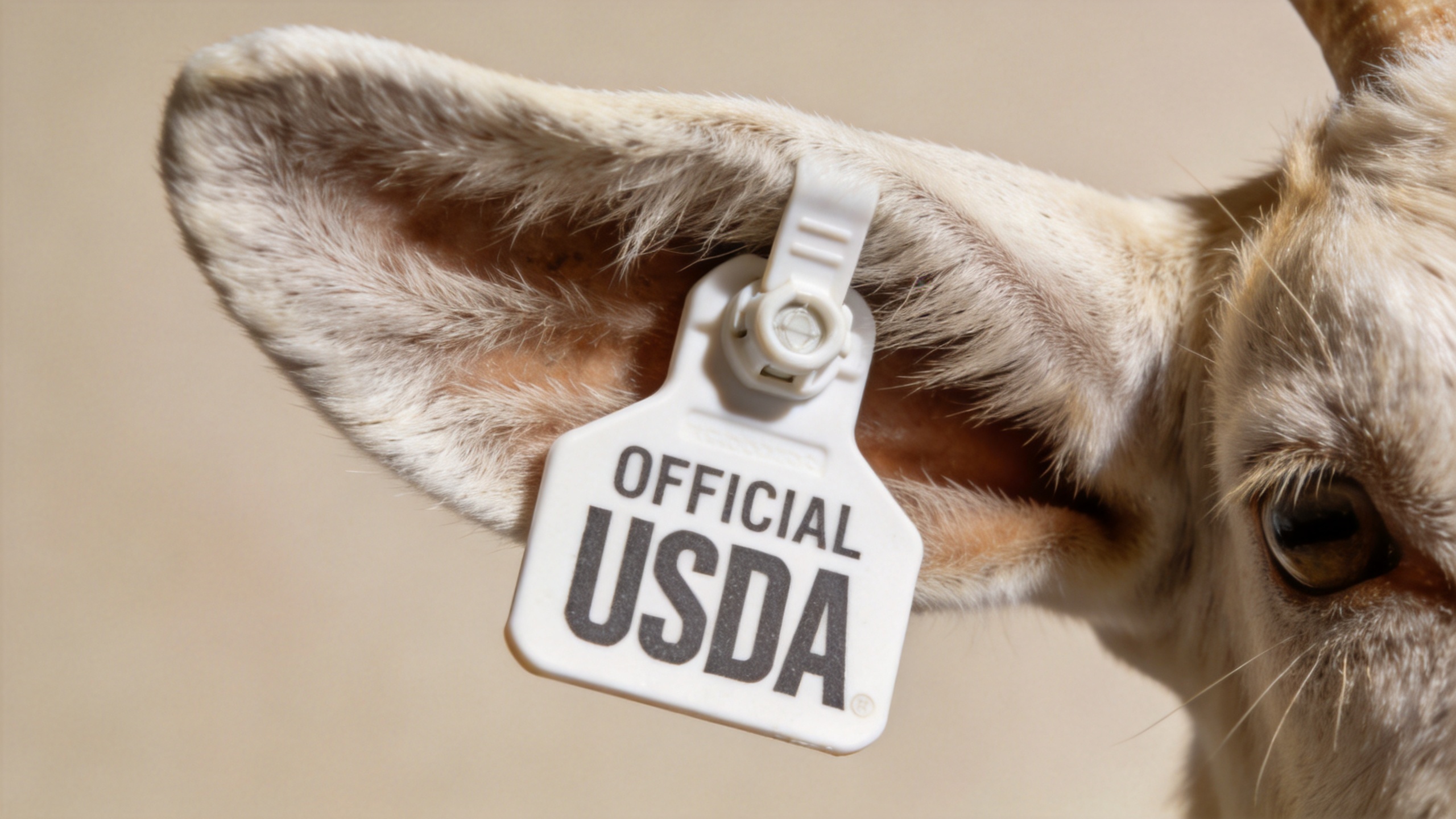
APHIS-approval is the deciding factor, not appearance. A tag can look identical to a compliant one while falling short of the tamper-resistance standard for official use. Producers who sourced bulk sheep ear tags or goat tags from unverified suppliers have discovered this problem only after the tags proved absent from the APHIS approved list, leaving record gaps that cannot be easily corrected.
Three Channels for Getting Official Scrapie Tags
There are three practical ways to source compliant scrapie tags for goats:
Free Tags Through USDA APHIS
APHIS provides free official ear tags to registered producers and accredited veterinarians through the national tag ordering program. Call 1-866-USDA-TAG (866-873-2824) or contact your state animal health office. Getting official scrapie tags for goats this way requires a Flock ID or Premises ID registered with USDA; enrollment is part of the process if you do not already have one. Verify current availability and eligibility directly with APHIS, since program terms and available quantities can change.
Direct from APHIS-Approved Manufacturers
APHIS publishes a list of approved tag manufacturers whose products meet official tamper-resistance and identification standards. This route makes the most sense when you need larger quantities of scrapie tags for goats, specific tag dimensions for your breed, or both visual and EID versions in the same batch. Approved manufacturers can typically ship tags pre-coded to your Premises ID or Flock ID on request.
Through Licensed Distributors and Livestock Suppliers
Many agricultural supply retailers stock approved sheep ear tags and goat identification tags sourced from APHIS-approved manufacturers. This works well for smaller or immediate purchases. Larger operations planning annual tag supply often find direct manufacturer sourcing delivers better per-unit pricing and more consistent lead times, which matters when your herd requires several hundred scrapie tags for goats each season.
Buying Scrapie-Compliant Goat Ear Tags in Bulk
Volume buyers sourcing scrapie tags for goats need to weigh more than unit cost. A manufacturer's experience with tamper-resistant tag construction matters, and lead time unpredictability is the variable that tends to cause operational problems. An order arriving two weeks late during peak tagging season creates scheduling issues that ripple across the whole operation.
BLUEWORTH manufactures TPU-based animal identification tags, including tamper-resistant designs for goat and sheep identification. Two product lines for buyers evaluating bulk sourcing:
- BLUEWORTH Boer Goat Ear Tag — TPU 58×58mm Tamper Tag: a large-panel tag with tamper-resistant construction designed for Boer goats and calves
- Animal Sheep Live Identification Ear Tag: a two-piece sheep ear tag set for live animal identification, suited for sheep breeding and traceability programs
Buyers evaluating whether a manufacturer's tags qualify as official scrapie tags for goats under APHIS requirements should verify directly with APHIS rather than relying on product descriptions or tamper-resistant branding claims. Confirming a supplier's status on the APHIS approved list before a large order avoids compliance issues later.
Common Questions About Scrapie Tag Compliance
Do all goats need scrapie tags for goats?
Under the 2019 rule, all goats 18 months or older and all sexually intact goats under 18 months entering interstate commerce require official identification. Closed herds with no interstate movement may face different requirements; your state veterinarian or APHIS can clarify what applies to your operation.
Can the same sheep ear tags be used for goats?
The same official program covers both species, but tag size and fit affect retention. Standard sheep ear tags may not perform as well on Boer goats, which have a heavier ear structure. Using tags sized appropriately for the breed and ear thickness reduces early loss rates.
What happens if a goat enters commerce without proper scrapie tags?
Animals without approved scrapie tags for goats may be rejected at livestock markets or interstate inspection points. In a disease investigation, a missing or non-compliant tag creates a traceability gap that is difficult to resolve after animals have already moved through commerce.
Can I order scrapie tags for goats pre-printed with my Premises ID?
Yes. Approved manufacturers typically offer custom printing with your USDA-issued Premises ID or Flock ID. Minimum order quantities vary by manufacturer and tag type. For operations also evaluating sheep NLIS-compatible or dual-purpose identification tags, ask manufacturers about EID-integrated options that combine visual compliance with electronic traceability.