EN
EN

Rechargeable Cattle Prodder: Battery Questions Buyers Should Ask
A rechargeable cattle prodder is often evaluated by shaft length, grip, and quoted output first. That is understandable, but it can lead a buyer to overlook the part that determines whether the tool is ready when a handling task begins: the battery system. For a farm manager, distributor, or purchasing team, battery due diligence is not a minor technical detail. It affects runtime, charging routines, spare-unit planning, transport, safety, and the cost of a tool that cannot be used during a busy loading or sorting window.
The useful question is not simply, “How many mAh does it have?” Capacity matters, but it is only one item in a procurement conversation. A well-specified rechargeable cattle prodder should come with clear answers about the battery chemistry, voltage, charge cycle, charger compatibility, replacement path, and checks an operator can perform before use.
Start with the battery configuration, not the headline number
Battery capacity is usually expressed in milliamp-hours (mAh). It is a useful comparison point only when it is paired with battery voltage, the product’s energy demand, and the supplier’s definition of normal use. A higher mAh figure does not automatically mean longer usable time across different voltage platforms or product designs.
For example, the confirmed product listing for the BLUEWORTH Swine/Cattle Electric Prodder identifies 3.7V/7.4V Li-battery options and a 2600mAh configuration. A buyer should ask which exact voltage and capacity apply to the selected model and shaft size, rather than assuming one specification covers every variation.
- Is the stated capacity nominal, and which battery voltage does it refer to?
- Is the pack integrated into the handle or removable?
- What is the expected duty pattern behind the runtime claim: intermittent activation, continuous testing, or a full handling shift?
- Does performance change in cold weather, high heat, or after extended storage?
For decision-stage procurement, ask the supplier to put these answers on the quotation or specification sheet. That reduces ambiguity when a purchasing team compares like-for-like offers.
Ask how charging is controlled and what comes in the box
The charger is part of the battery system. Confirm whether the charger is included, whether it is matched to the exact battery pack, and whether it supports the destination market’s plug and voltage requirements. Do not assume that a generic adapter is acceptable just because its connector fits.
General lithium-ion safety guidance consistently points buyers toward compatible charging equipment, a dry charging location, and immediate attention to damaged batteries or chargers. In practical terms, a buyer should request the charging time, charge-status indication, instructions for a missed or interrupted charge, and the recommended action if the unit becomes unusually hot, swollen, damaged, or wet.
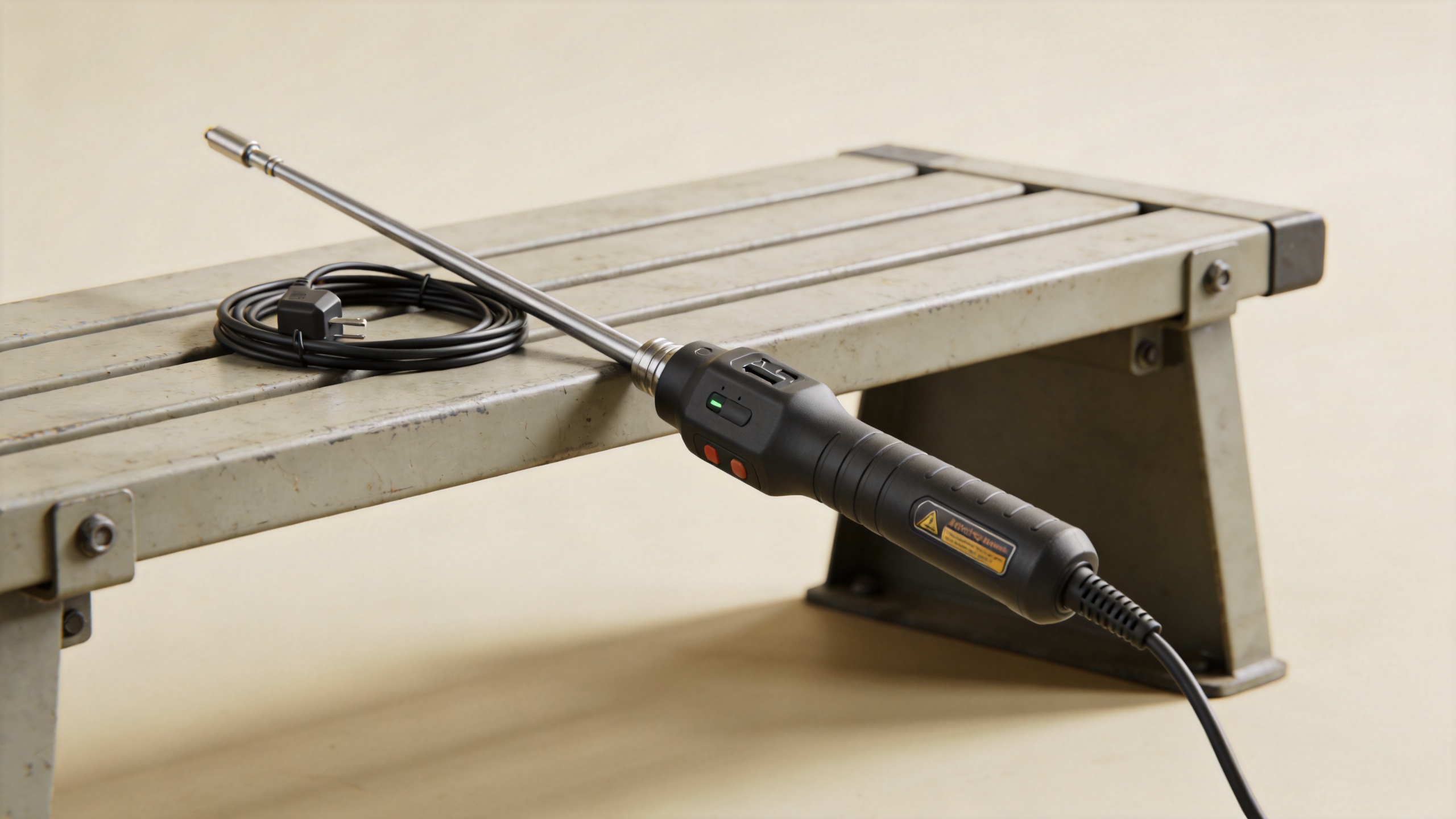
A supplier checklist for charging questions
- What charger model is supplied with this rechargeable cattle prodder?
- What input plug and voltage options are available for the delivery country?
- How long does a normal charge take from a low battery state?
- Does the product provide a charge indicator or low-battery warning?
- What charging temperature and storage conditions does the manufacturer specify?
- What is the safe procedure if the charger, cable, or battery housing is damaged?
Plan for runtime around the handling workflow
Procurement teams sometimes ask for “hours of runtime,” but a more useful request is an operating scenario. A rechargeable cattle prodder is typically activated in short intervals, so the number of handling events, trigger duration, ambient temperature, and battery age can matter more than a single uninterrupted-time estimate.
Ask the supplier to describe the test method used for its runtime statement. Then compare that method with your own workflow: receiving cattle, loading trailers, moving animals through a chute, or keeping a backup tool available during maintenance. If a buyer operates several sites or has seasonal peaks, a two-unit plan may be more reliable than trying to stretch one tool beyond its intended shift.
There is a fair counterargument for small operations: a premium spare-battery plan may not be necessary when the device is used rarely. Even then, a buyer should confirm the storage procedure and availability of replacement parts. A seldom-used battery can still become the reason a tool is unavailable when needed.
Clarify spare batteries, replacements, and service support
Before placing a bulk order, ask whether the battery is user-replaceable, service-replaceable, or fixed inside the tool. Each option affects downtime and after-sales planning. A removable pack may simplify field swaps, while an integrated pack may require a defined repair or replacement process.
Request answers to these questions:
- Can buyers order genuine replacement batteries and chargers separately?
- Are spare parts tied to a serial number, voltage option, or production batch?
- What documentation accompanies a replacement pack?
- What warranty coverage applies to the battery, charger, and handle assembly?
- Who handles troubleshooting if a unit will not charge or loses capacity unusually quickly?
For a distributor, consistency matters as much as availability. Confirm whether the supplier can identify the exact battery version supplied with each lot. Direct communication with the manufacturing team can make technical questions and batch-related follow-up more straightforward than relying on an incomplete catalog listing.
Make battery checks part of routine readiness
Battery maintenance should be a short pre-use routine, not an afterthought. Before a scheduled livestock movement, confirm the charge indicator, inspect the charger cable and housing, and check that the handle, shaft, and contact area are clean and intact. Do not use a pack that shows leakage, deformation, unusual heat, odor, or damage.
For longer storage, follow the manufacturer’s specific instructions. General battery-safety guidance also supports keeping lithium-ion equipment dry, away from direct sunlight, extreme temperatures, and combustible materials. Record the last charge date for fleet tools so that a low-use unit is not forgotten until the day it is needed.
Use the battery discussion to assess the supplier
Battery questions reveal more than battery quality. They show whether a supplier can provide clear technical documentation, support the selected configuration, and explain how replacement parts are handled. A credible answer should distinguish confirmed product specifications from general guidance and should not promise identical runtime in every environment.
When evaluating a rechargeable cattle prodder, keep animal welfare and handling practice in view. Battery-operated prods should be used responsibly and only where appropriate; they are not a substitute for sound facility design, trained staff, calm movement, or suitable non-electric driving aids. Ask for operating instructions and make sure local welfare rules and site policies are followed.
Rechargeable Cattle Prodder Battery Procurement Matrix
Use this compact matrix when comparing quotes. Each row is a separate question for the rechargeable cattle prodder supplier.
| Rechargeable cattle prodder question | Evidence to request |
|---|---|
| Rechargeable cattle prodder battery voltage | Variant specification |
| Rechargeable cattle prodder capacity | mAh rating by model |
| Rechargeable cattle prodder runtime method | Test conditions |
| Rechargeable cattle prodder charger | Charger model and plug |
| Rechargeable cattle prodder charge time | Written instruction |
| Rechargeable cattle prodder indicator | Low-battery explanation |
| Rechargeable cattle prodder spare pack | Part number and lead time |
| Rechargeable cattle prodder replacement process | Service procedure |
| Rechargeable cattle prodder storage guidance | Temperature limits |
| Rechargeable cattle prodder safety check | Pre-use inspection list |
| Rechargeable cattle prodder warranty | Battery and charger terms |
| Rechargeable cattle prodder batch record | Lot identification |
| Rechargeable cattle prodder transport pack | Shipping documentation |
| Rechargeable cattle prodder repair contact | Support-channel details |
| Rechargeable cattle prodder end-of-life plan | Disposal guidance |
| Rechargeable cattle prodder sample order | Trial-unit availability |
| Rechargeable cattle prodder incoming check | Acceptance criteria |
| Rechargeable cattle prodder operator training | Operating instructions |
| Rechargeable cattle prodder local compliance | Buyer verification responsibility |
| Rechargeable cattle prodder reorder support | Configuration consistency |
| 2600mAh livestock prodder configuration | Exact selected variant |
Final purchasing questions
Before approving an order, ask for the exact battery voltage and capacity, the charger specification, expected use-case runtime, charge time, low-battery indication, storage limits, replacement options, warranty terms, and batch identification. For the 2600mAh livestock prodder configuration, also confirm that the stated capacity belongs to the exact model you are purchasing.
That checklist turns battery information from a marketing line into a manageable procurement requirement. The result is a rechargeable cattle prodder that is easier to support, safer to maintain, and more likely to be ready for the livestock-handling tasks it was purchased to assist.