EN
EN

Portable Ultrasound Machine for Dogs: Questions for Equipment Suppliers
Buying a portable ultrasound machine for dogs is not just a question of screen size or a headline feature list. For a veterinary clinic, reproductive practice, mobile service, or breeding operation, the right system has to fit the people who will use it, the dogs they see, and the support they can realistically access after delivery.
Search results for this category tend to emphasize portability, reproductive examinations, abdominal imaging, and point-of-care use. Those are useful starting points, but they do not answer the procurement questions that determine whether a device becomes part of a reliable workflow. Before comparing quotes, ask suppliers for clear, written answers to the questions below.
1. Which clinical workflows is this system configured to support?
Start with the work you expect the device to handle rather than the broad label “veterinary ultrasound.” Ask the supplier to describe the intended workflow for canine pregnancy checks, abdominal screening, bladder assessment, and other examinations relevant to your practice. A portable ultrasound machine for dogs may be marketed for several animal types, but that does not automatically mean every included probe and preset suits a small-animal workflow.
Ask for a live demonstration using a workflow similar to yours. If a remote demo is the only option, request unedited sample clips that show the user interface, measurement process, image freeze function, and report or image-export steps. This makes it easier to see whether the operating sequence is practical for your team.
- Which canine examination workflows are supported by the supplied configuration?
- Which measurements, annotations, and image-storage functions are available?
- Can the supplier show a complete scan-to-export workflow rather than a short promotional clip?
2. What probe is included, and why is it appropriate for dogs?
Probe selection is often the most important detail in a portable ultrasound purchase. Ask for the probe type, frequency range, footprint, connector type, and the use cases the supplier recommends for it. Then ask what the limitations are. A supplier who can explain where a probe performs less well is usually giving you more useful information than one who simply says it is suitable for all animals.
For example, a breeding-focused buyer may prioritize a workflow that supports reproductive checks, while a clinic may need a broader approach for routine abdominal work. If you expect to scan dogs of different sizes, ask whether an additional probe is available and whether the machine recognizes it automatically. Do not assume that an optional probe is included in the quoted price.
3. How portable is the system during a real working day?
“Portable” can mean handheld, cart-capable, laptop-style, or simply lighter than a console unit. Ask for the unit weight, battery specification, charging method, startup time, and what accessories are required to transport it safely. A portable ultrasound machine for dogs should fit your actual examination environment, not just a product photo.
Ask whether the display remains readable under the lighting conditions you expect and whether the unit can be operated with gloves or while moving between examination rooms. If you provide mobile services, clarify whether a protective case, spare battery, vehicle charging option, or trolley is included.
4. What image-quality evidence can the supplier provide?
Do not judge image quality from a single still image. Ask for representative images and short clips from canine-relevant workflows, together with the settings used to produce them. Request an explanation of the adjustment controls available to the operator, such as depth, gain, focus, and preset selection. The goal is not to demand an ideal image in every situation; it is to understand what a trained user can adjust and what result is reasonable to expect.
Before accepting claims about diagnostic suitability, ask what training level the supplier assumes. Ultrasound quality depends on the system, the probe, the animal, and operator technique. A responsible supplier should distinguish equipment capabilities from clinical interpretation and should not imply that the device replaces veterinary judgment.
5. What training is included after the equipment arrives?
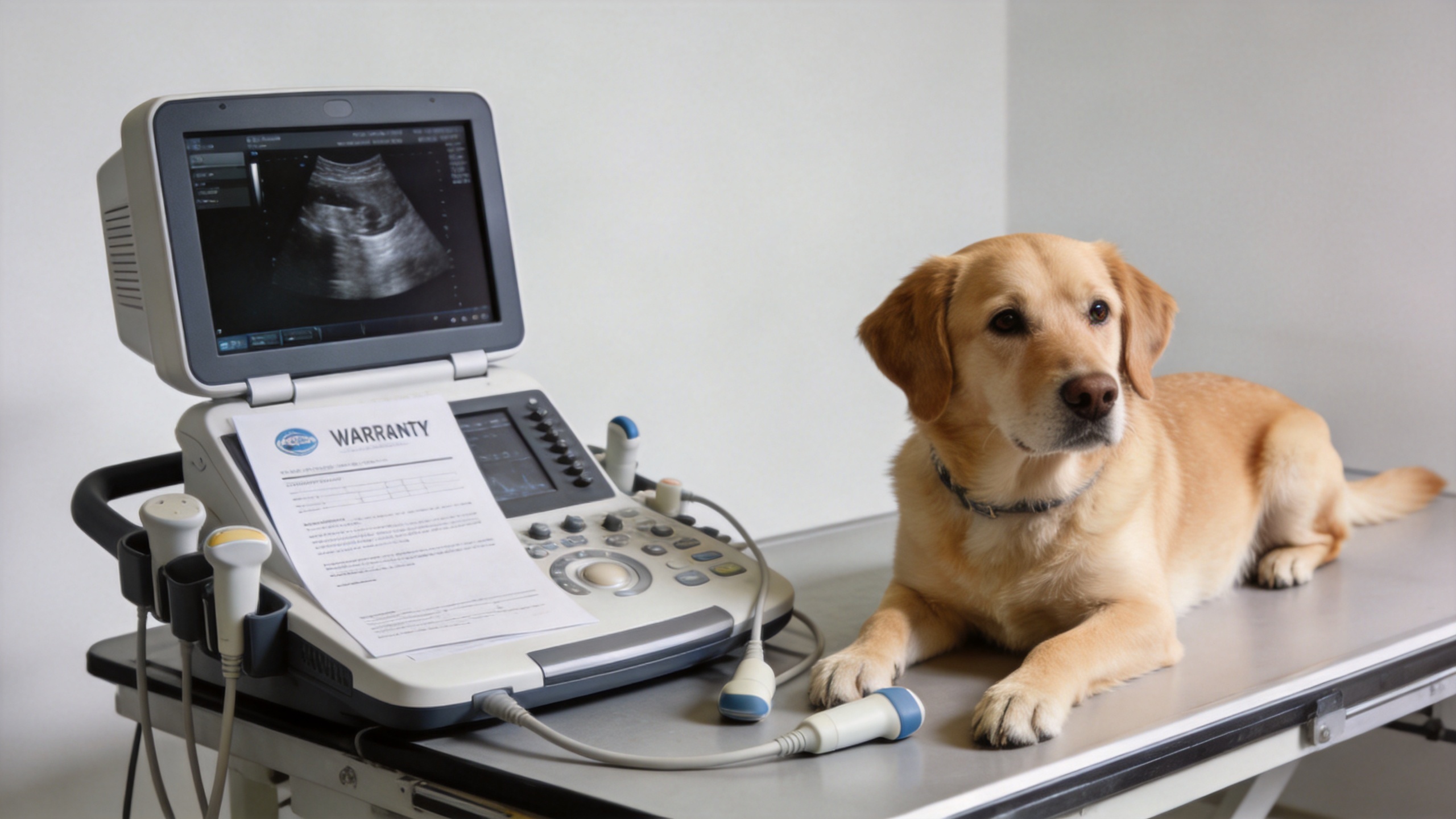
Training is a purchasing criterion, not an add-on. Ask whether onboarding is live or recorded, how long it lasts, who provides it, and whether it covers the specific workflows your team plans to use. For an ultrasound machine for dog breeders, practical guidance on machine setup, basic image capture, hygiene, and escalation to a veterinarian can be especially valuable. It should not be presented as a substitute for professional diagnostic training.
Ask for the training agenda in writing. Useful topics include initial setup, probe handling, image optimization, file management, cleaning, routine troubleshooting, and the route for clinical questions that the equipment supplier cannot answer. If several people will use the device, confirm whether training is limited to one attendee or can be shared with the team.
6. How will service, repairs, and software updates be handled?
This is where comparable hardware quotes often diverge. Ask for the warranty period, what is covered, who pays shipping for repair, the typical response process, and whether a loan unit is available. Also clarify whether software updates are included, how they are delivered, and whether updates require a service visit.
Ask the supplier to define their first-response target and the escalation path when a device cannot be used. If your work depends on same-day scanning windows, a low purchase price may not compensate for an unclear repair process. Request a written contact method and confirm the time-zone coverage for technical support.
7. What documentation will be supplied with the order?
Ask for the quotation, configuration list, user manual, warranty terms, packing list, and any available quality-control or inspection documentation. Documentation gives your team a reference point if the delivered configuration differs from the quotation. It also helps buyers compare proposals fairly: an apparently similar portable ultrasound machine for dogs may include different accessories, licenses, probes, batteries, or support commitments.
For buyers evaluating a listed option, review the confirmed product page for the ECI-X8 Color Doppler Ultrasound Scanner for Pets, then ask the supplier to confirm the exact delivered configuration in the pro forma invoice. The page title is a starting point; the invoice and written specification should be the final reference.
8. Can the supplier support a sample, demo, or acceptance checklist?
A structured acceptance checklist reduces misunderstandings. Before payment, agree on what you will verify after delivery: power-on, probe recognition, display function, charging, image capture, accessory count, and access to training materials. Where practical, arrange a demo or sample review before a larger purchase.
You could argue that a small operation does not need this level of procurement discipline. That is fair when the device is a low-risk backup. But when the machine will support scheduled reproductive work or regular patient assessments, written confirmation of configuration and support is usually worth the extra effort.
A supplier-question checklist to send with your RFQ
- Please confirm the exact model, included probe(s), accessories, and optional items.
- Please identify the canine workflows each included probe is intended to support.
- Please provide representative canine image or video samples and the settings used.
- Please explain included training, its format, and the support contact after delivery.
- Please provide warranty, repair, replacement, and software-update terms in writing.
- Please state delivery lead time, packing method, and any buyer responsibilities on arrival.
- Please confirm the documentation included with the order and the acceptance process.
Make the decision on workflow fit, not headline specifications
The most suitable portable ultrasound machine for dogs is the one whose probe configuration, usability, training, and service plan match your operating reality. Use supplier discussions to turn broad marketing claims into clear commitments: what is included, who will help your team use it, and what happens if the system needs support. That approach gives clinics and breeders a more dependable basis for comparing equipment proposals.