EN
EN

How to Select a Large Dog Water Fountain by Capacity and Placement
Choosing a large dog water fountain is less about buying the biggest reservoir and more about matching daily water use to the place where your dog actually drinks. A fountain that is too small creates frequent refills; one that is awkwardly placed can be ignored, bumped, or allowed to become dirty. The right choice keeps fresh water visible, accessible, and practical to maintain.
For a planning estimate, common veterinary guidance puts a dog’s daily water intake around one ounce per pound of body weight, although food moisture, temperature, exercise, medication, and health can change that amount. Treat the number as a starting point—not a diagnosis—and watch your own dog’s drinking pattern. If intake suddenly rises or falls, contact a veterinarian.
Start With Daily Demand, Not Tank Size Alone
A large dog can empty a small dog drinking fountain surprisingly fast, especially in warm weather or in a multi-pet home. Begin by estimating how much the dog typically drinks in 24 hours, then add a buffer for evaporation, splashing, and the time between your routine checks.
- One large dog, checked daily: choose a reservoir that comfortably covers the day’s normal intake plus reserve water.
- Two dogs or a large dog with high activity: increase capacity or plan to refill more than once daily.
- Weekends away or long workdays: capacity helps, but it does not replace a daily cleanliness and water-level check.
A 4 L model may suit many homes where the fountain is checked every day, but it is not automatically enough for every large breed or multiple-dog household. Before comparing prices, ask yourself: do you know how much water disappears between your morning and evening checks? That observation is more useful than a capacity label alone.
Choose the Capacity-to-Refill Rhythm That Fits Your Household
A suitable large dog water fountain supports a realistic routine. A larger reservoir reduces the chance of an empty basin, but the water and fountain still need regular cleaning. If a very large tank makes you postpone washing it, a slightly smaller, easier-to-handle design may be the better choice.
| Household situation | Practical capacity approach | What to monitor |
|---|---|---|
| One large dog, predictable routine | Choose enough water for normal daily use plus a margin. | Water level at the end of the day. |
| Large dog plus another pet | Size for combined use, not the largest dog alone. | Whether the basin is low before the next scheduled check. |
| Warm room, active dog, or frequent outdoor play | Use extra reserve capacity and refill more proactively. | Faster water loss and splash area. |
| Limited kitchen or utility-room space | Favor a stable footprint and easy refill path over maximum volume. | Whether you can remove and wash the reservoir easily. |
There is a useful tradeoff here: more volume means fewer refills, while a compact footprint can be easier to position and clean. For a dog that drinks heavily at certain times, a dog drinking fountain with a visible water-level indicator can make the routine easier to manage.
Pick a Placement Before You Pick the Fountain Shape
Placement determines whether a large dog water fountain works in daily life. Measure the intended spot first. Check the floor surface, nearby power access, traffic pattern, and the space needed to lift out a reservoir without spilling.
Good placement usually has four qualities
- Easy access: Place it where your dog naturally passes and can drink without being blocked by doors, furniture, or another pet.
- Low disturbance: Avoid a narrow walkway, a spot beside a swinging door, or a place where the dog is repeatedly startled while drinking.
- Simple cleanup: A water-resistant mat and a hard, level floor make splashes easier to manage than carpet or uneven flooring.
- Practical power and refill access: Keep cords protected and avoid stretching them across a walking path. Ensure you can carry water to the unit and remove the pump or reservoir for cleaning.
If you are deciding between a tall, narrow design and a broad, low one, let the location decide. A narrow space may favor a smaller footprint; a dog that tends to nudge bowls may benefit from a lower, more stable base. Condition matters: for a calm dog in a quiet utility area, either layout can work. In a busy family kitchen, stability and spill control become more important.
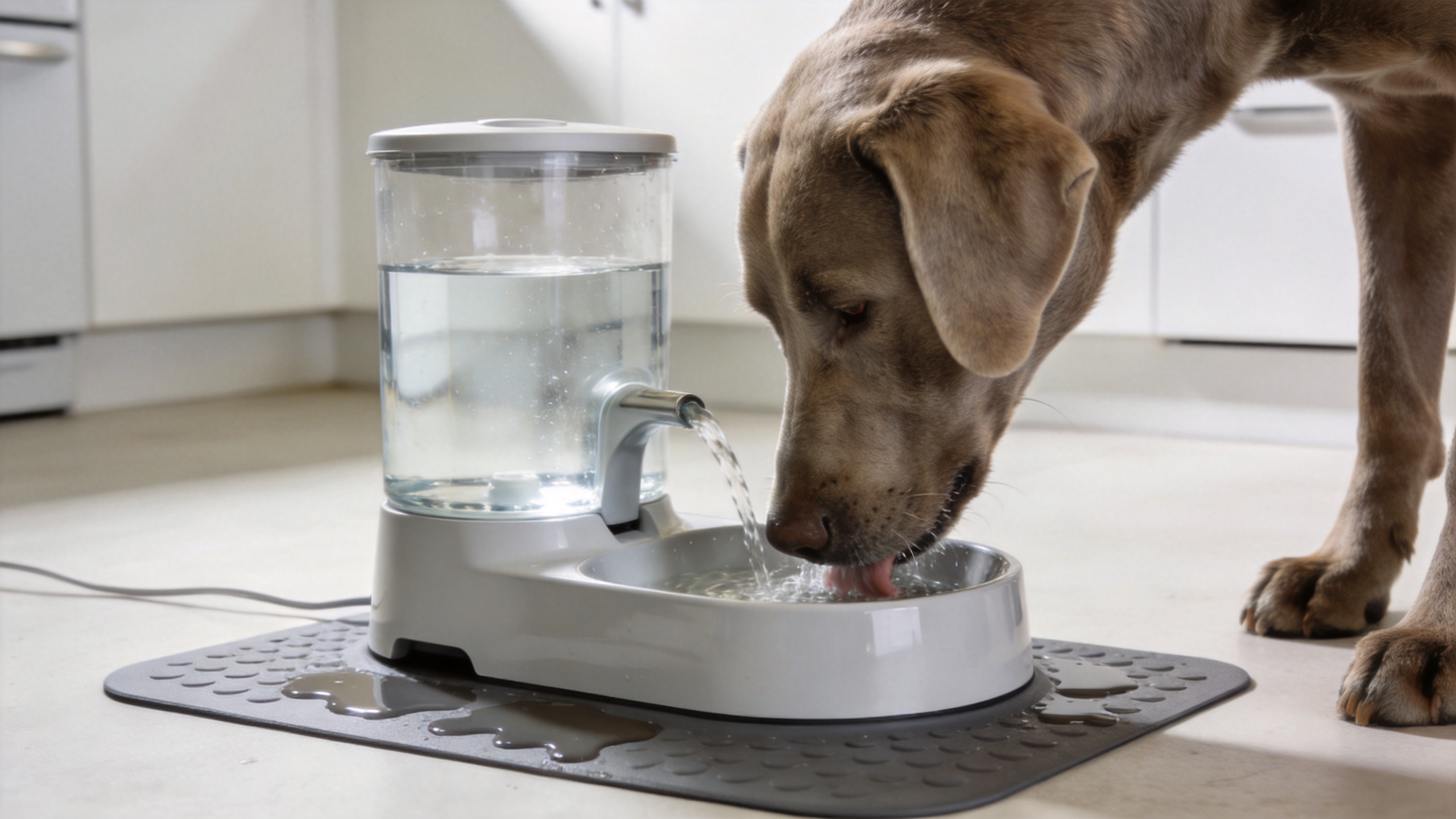
Match Height, Bowl Area, and Flow to Your Dog
Large dogs need enough room to approach the drinking surface comfortably. Look at the height of the drinking area, the width of the basin, and whether the flow creates a gentle stream or a more noticeable sound. There is no universal setting; aim for a fountain your dog will use consistently.
A broad drinking area can be helpful for dogs with larger muzzles or homes with two pets approaching at once. A quiet pump can matter when the fountain sits near a bed, home office, or nervous dog’s resting zone. During the first week, observe whether the dog drinks normally, paws at the stream, avoids the unit, or leaves excess water around it. Those behaviors tell you whether the design and location are working together.
Use Maintenance Needs as a Selection Criterion
A large dog water fountain only delivers its intended benefit when it stays clean. Compare how easily you can access the pump, rinse the reservoir, remove hair, and change the filter if the model uses one. A complicated cleaning process often leads to inconsistent maintenance.
- Choose smooth, reachable interior surfaces rather than hard-to-scrub corners.
- Confirm that replacement filters and pump parts are available before relying on a filter-based system.
- Plan a regular rinse-and-clean schedule based on the manufacturer’s instructions and your household’s water quality, hair, and use level.
- Check water levels daily, even when the reservoir is large.
A 4 L Fountain Option for Capacity-Focused Homes
For buyers who want a practical starting point, this 4 L pet water fountain for dogs and cats is a confirmed product option. Its product record identifies a 4 L capacity, ultra-quiet operation, an LCD display, a timing setting, and a rechargeable battery. Evaluate it against your own dog’s daily intake, the floor space available, and how often you can clean and refill it; the product title alone should not substitute for those checks.
Final Checklist for Choosing a Large Dog Water Fountain
- Estimate actual household water use and add a reserve.
- Choose a refill rhythm you can maintain every day.
- Measure the intended location, including cleaning and cord clearance.
- Prioritize a stable base and manageable spill zone in busy areas.
- Check whether your dog can drink comfortably from the bowl area and height.
- Make sure cleaning and replacement parts fit your routine.
The most suitable large dog water fountain is the one that stays filled, clean, and easy for your dog to use. Capacity protects against running low; thoughtful placement turns that capacity into reliable daily hydration.