EN
EN

How to Choose a Ceramic Cat Water Fountain for Material, Capacity and Cleaning
A ceramic cat water fountain can be a practical upgrade when you want circulating water without committing to a plastic-heavy appliance. The better choice is not simply the heaviest model or the largest tank. It is the one whose material construction, usable capacity, and cleaning routine fit the cats and people in your home.
Before comparing prices, ask a more useful question: can you see how every water-contact part comes apart? A fountain that looks attractive but leaves the pump, intake, or narrow channel difficult to reach may become a chore. This guide uses a consideration-stage checklist to help you compare a water fountain for cats ceramic options with fewer assumptions.
Start by checking what “ceramic” actually describes
Not every ceramic cat water fountain has the same material layout. Some have an all-ceramic bowl and top, while others use a ceramic tray or drinking surface paired with a plastic reservoir, lid, or pump housing. Neither format is automatically wrong. What matters is knowing which pieces contact water and which pieces you will scrub regularly.
- All-ceramic drinking components: usually offer a substantial, stable feel and a smooth surface that is easy to inspect for residue.
- Ceramic tray designs: can keep the visible drinking area ceramic while using lighter components elsewhere; inspect joints and seams where the materials meet.
- Glaze quality and edges: look for a smooth, intact finish with no rough chips, cracks, or hard-to-reach decorative grooves.
- Weight and placement: a heavier bowl may resist sliding, but it also needs a stable counter or floor location where it will not be knocked during cleaning.
It is tempting to treat ceramic as a blanket promise of easier hygiene. In practice, a smooth bowl helps only if the pump cover, water path, and filter compartment can also be opened and rinsed. If your cat is sensitive to noise, also check where the pump sits and whether low-water operation is likely to make it louder.
Choose capacity from your refill routine, not the label alone
Capacity is useful because it gives you a buffer between refills, but it does not remove the need to refresh water. A small household may prefer a compact reservoir that is easy to carry to the sink. A multi-cat home may value more volume, provided the fountain remains easy to empty and clean. Comparable ceramic fountains in the market commonly range from around 60 oz to 2.1 L, while larger products can go beyond that.
For example, the verified MDC288 Smart Pet Water Fountain with Ceramic Tray is listed with a 4.5 L capacity. That can suit households that want a larger water reserve, but a larger tank should still be fully drained during routine cleaning. Capacity is not a reason to leave the same water in place indefinitely.
| Home situation | What to prioritize | Question to ask |
|---|---|---|
| One cat, limited counter space | Compact footprint and easy lifting | Can one person carry the reservoir to the sink safely? |
| Two or more cats | Useful water reserve and stable base | Will the fill level stay above the pump between your normal checks? |
| Frequent travel or busy schedule | Clear water-level visibility | Can a caregiver see and refill it without disassembling the unit? |
A larger ceramic cat water fountain is helpful only when it fits the routine you will actually maintain. If the unit is too heavy to lift comfortably, the extra volume may work against regular cleaning.
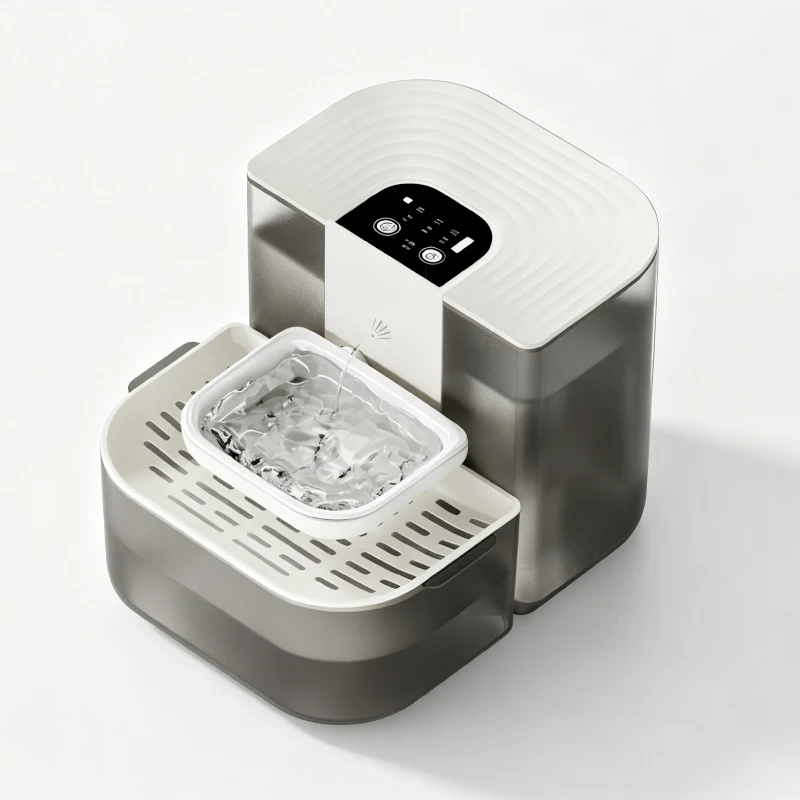
Make cleanability the deciding factor
The daily question is simple: how many parts need attention before the fountain is ready again? Look for a design that lets you remove the bowl or tray, lid, filter, pump cover, and pump without forcing tools into tight corners. A water fountain for cats ceramic should let you see the water line and inspect the places where hair, food particles, or mineral residue can collect.
As a practical baseline, refresh the water often and plan to clean the full fountain roughly weekly, with more frequent attention in dusty homes, multi-cat homes, or periods of heavy use. Follow the product manual for filter replacement intervals. The first thing many buyers overlook is the pump: remove its cover, rinse the intake area, and use a small soft brush for any accessible channel. Do not use harsh cleaners or leave residue behind; rinse thoroughly before reassembly.
- Unplug the fountain and discard the remaining water.
- Remove the filter and set it aside according to the maker’s instructions.
- Separate the water-contact parts and wash smooth ceramic pieces with mild dish soap and a soft sponge.
- Open the pump cover, clear visible debris, and rinse the intake and impeller area if the design allows.
- Rinse every part thoroughly, dry the exterior, reassemble, and refill with fresh water.
There is a small counterargument worth keeping in mind: a simpler plastic fountain may have fewer pieces than a more elaborate ceramic model. That is fair. But if ceramic is your preferred surface, choose the simplest ceramic configuration that gives you access to every cleaning point.
Use this final comparison checklist
- Is the whole water-contact surface ceramic, or only the tray?
- Can you reach the pump, intake, seams, and filter housing without difficulty?
- Does the reservoir volume suit your normal refill schedule and number of cats?
- Can you safely lift, empty, and rinse it when full?
- Are replacement filters and pump-care instructions clearly available?
- Does the fountain remain stable where your cat drinks?
The right ceramic cat water fountain is the one you will keep clean consistently. Material affects the feel and the drinking surface; capacity affects your refill buffer; cleaning access determines whether the fountain stays convenient after the first week. Compare those three factors together, and a water fountain for cats ceramic becomes much easier to evaluate.