EN
EN

How to Apply Piglet Ear Tags Safely and Consistently
Piglet identification is a small task with a large effect on daily records, health follow-up, and group management. Well-chosen livestock tags are only part of the equation: clean equipment, calm handling, correct placement, and early checks are what make a tag stay readable and comfortable. This practical guide explains how to use livestock tags on piglets in a repeatable, welfare-aware way.
From an animal-welfare standpoint, good tagging begins before the applicator touches the ear. A rushed process can mean an off-center hole, a damaged tag stem, or unnecessary tissue stress. The goal is not simply to attach livestock tags; it is to create a reliable identification point while minimizing avoidable discomfort.
Prepare the piglets, records, and livestock tags first
Set up the work area before bringing piglets forward. Confirm the ID sequence, litter or pen records, and which tag component belongs in each side of the applicator. Lay out enough livestock tags for the session, plus spare tags that match the same numbering plan. Mixing formats halfway through a job is an easy way to create record errors.
- Use a tag size and format appropriate for young pigs and the intended identification program.
- Inspect each tag for a straight stem, clean locking area, and legible printed number.
- Check that the applicator pin is straight, secure, and compatible with the selected livestock tags.
- Clean the applicator jaws and prepare an appropriate disinfectant for the tagging site.
- Record the tag number before application or have one person call and log it as the tag is applied.
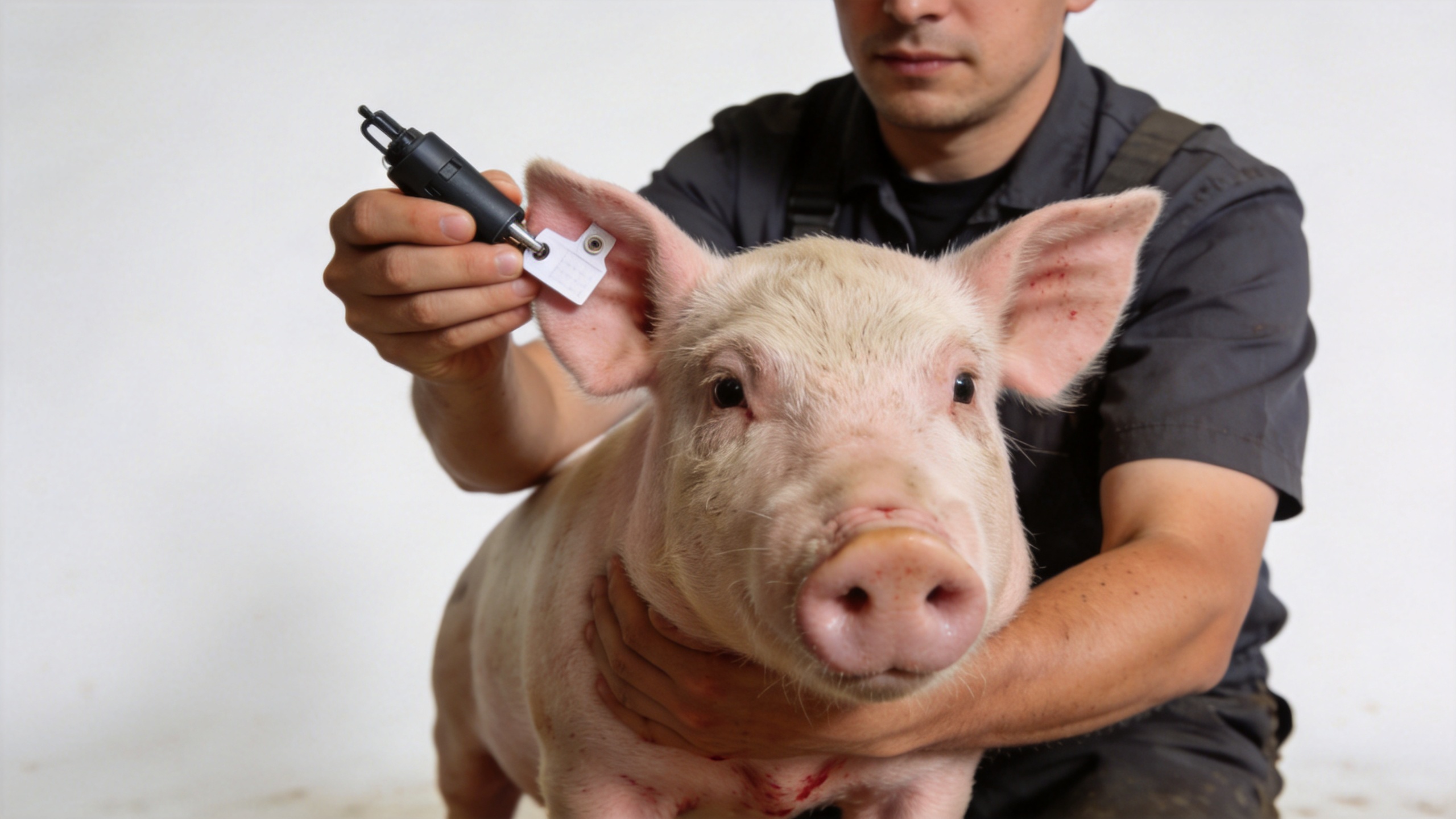
Before you start, ask a simple question: can your team identify each piglet and tag number without stopping to guess? If not, organize the tray and record sheet again. A few minutes of preparation prevents duplicated IDs and re-tagging later.
Restrain the piglet calmly and inspect the ear
Good restraint protects both the piglet and the handler. Work with a trained team and use a method that holds the head steadily without twisting the ear. The ear should be visible, dry enough to inspect, and free of obvious injury, heavy dirt, or irritation. If a piglet appears unwell or the ear tissue is already damaged, pause and seek advice from the farm’s veterinary professional or protocol rather than forcing the procedure.
Clean handling matters because the puncture site is fresh tissue. Keep the applicator clean between animals when needed, especially if it contacts dirt, blood, or another contaminated surface. In practice, two-person application often has as much effect on correct placement as the design of the livestock tags themselves: one person stabilizes, while the other confirms the location and applies the tag.
Choose the correct placement zone
For routine piglet tagging, aim for a centered position in the stronger middle area of the ear, between the visible ear ribs and away from the outer edge. Pig-tagging guidance also advises paying attention to the large blood vessels visible on the underside of the ear. Placement too close to the margin can increase snagging and loss; placement through a major vessel or overly thick tissue can increase bleeding and tissue trauma.
The exact acceptable zone can vary with the tag style, piglet size, and local identification rules. Treat this as a practical placement principle, not a substitute for current veterinary or regulatory guidance. If your livestock tags include RFID or are part of an official identification program, verify the required orientation and location before the session.
A quick visual check before closing the applicator
- Is the tag centered rather than hanging from the ear edge?
- Is it positioned between ear ribs rather than through a major vein?
- Is there enough clearance from the head, ear margin, and folds of tissue?
- Are the male and female tag parts aligned correctly in the applicator?
Apply the tag with one controlled action
Once the placement is confirmed, align the applicator squarely and close it in one firm, controlled motion. Do not repeatedly squeeze or twist the applicator while the stem is partly through the ear. Release the tool, then immediately confirm that the two parts of the livestock tags are fully locked and that the number faces the intended viewing direction.
Fast application is useful only when placement remains consistent. Optimizing the process for speed can hide uneven punch depth, which may show up weeks later as early loss. A steady rhythm—check, align, close, inspect, record—is usually more reliable than trying to rush a large group.
Inspect each piglet immediately after tagging
Look for a fully seated tag, a centered hole, and bleeding that is limited and settling normally. Record the number while the piglet is still identified. If the tag is misapplied, broken, or not securely locked, follow the farm’s corrective procedure rather than leaving a questionable ID in place.
For a practical option designed for piglet identification, review the product details for the BLUEWORTH 1#+7# Round type Yorkshir piglets ear tag 30*28mm 10 colors. Confirm compatibility with your applicator and local program requirements before ordering or applying any livestock tags.
Before the next tagging day, compare your selected format and applicator setup with the piglet ear-tag product specifications so the team can confirm fit and handling sequence.
Monitor the first weeks after application
The first few weeks are the most useful time to catch issues. Check the piglets during normal daily observation and note swelling, heat, discharge, persistent bleeding, marked sensitivity, rubbing, or loose tags. These signs do not automatically mean the tag is at fault; hygiene, placement, ear condition, handling, and equipment wear can all contribute. Prompt review is better than waiting until a tag is lost and the record is uncertain.
Keep a simple log of tag losses or reactions by date, litter, handler, applicator, and tag batch. That record can reveal whether a problem is linked to technique, a worn pin, handling conditions, or a particular batch of livestock tags. It also makes the next tagging session easier to improve.
How to choose livestock tags for a consistent piglet routine
Not all livestock tags suit every piglet-management plan. Choose livestock tags by matching the ear size, the visual-reading distance, the identification record format, and the applicator already used on the farm. For young animals, livestock tags should sit comfortably without creating unnecessary leverage at the edge of the ear.
When ordering livestock tags, confirm the male-and-female pairing, number sequence, color plan, and applicator fit before the delivery date. A small test batch of livestock tags can help the team check locking action and readability before a full litter is processed. Store livestock tags cleanly and protect them from heat, dirt, and damage before use.
Questions to ask before a tagging session
- Are these livestock tags appropriate for piglets rather than mature animals?
- Do the livestock tags match the applicator pin and loading method?
- Can the livestock tags be read at the distance needed during routine checks?
- Does the numbering on the livestock tags match the farm record system?
- Have the livestock tags been checked for straight stems and clean locking parts?
- Are spare livestock tags available if a component is damaged during setup?
Use the same review for every new batch of livestock tags. Consistent livestock tags simplify visual checks, but consistency also depends on a standard placement method and a clear record sheet. If different people apply livestock tags, agree on the placement zone and inspection sequence in advance.
For farms using official identification, livestock tags may have additional orientation, numbering, or approval requirements. Verify those requirements with the relevant authority before use. For management-only livestock tags, the same welfare principles still apply: clean equipment, stable restraint, centered placement, and early observation.
Finally, track how livestock tags perform after application. Note missing livestock tags, unreadable livestock tags, ear reactions, and any applicator problems. Reviewing those observations helps the team improve the next session and makes livestock tags more reliable as part of the wider piglet identification system.
Build a repeatable piglet tagging routine
Reliable livestock tags support traceability, but consistent application is what turns them into dependable farm records. Prepare clean tools, restrain piglets carefully, place the tag in the supported middle zone, close the applicator decisively, and inspect both the ear and the record straight away. With a clear routine, the process becomes calmer for the team and more dependable for every piglet.
For any concern about infection, unusual ear damage, welfare, or identification compliance, consult the farm veterinarian and the relevant local authority. Their current guidance takes priority over a general how-to article.