EN
EN

Electronic Cattle Tags Compared: UHF vs. LF Technology for Beef and Dairy Farms
Choosing between UHF and LF electronic cattle tags often looks simple on a spec sheet but plays out very differently in practice once you factor in your operation's layout, existing reader infrastructure, and whether you're running a beef feedlot, a cow-calf unit, or a dairy parlor. Buyers sourcing electronic ear tags for cattle at volume, whether for a single large farm or for multiple client accounts—need to understand these differences before committing to a tag format and reader infrastructure. Based on how these two technologies perform across different herd configurations, the answer isn't "one is better"—it's "one fits your workflow better." This guide breaks down the key differences so you can match the technology to the application.
How Electronic Cattle Tags Use RFID: LF and UHF Explained
Both LF (low-frequency) and UHF (ultra-high-frequency) electronic ear tags for cattle store a unique animal identification number on an embedded RFID transponder. The decision between these two electronic cattle tags technologies determines your entire reader hardware investment and operational workflow. The core difference is the radio frequency used to read that number—and frequency determines everything else: how far away a reader can detect the tag, how fast it can process multiple animals at once, and which equipment standards apply.
- LF tags operate at 134.2 kHz and follow ISO 11784/11785 standards. They are the established standard for cattle RFID, compatible with USDA NUES (840 series) official ID programs and widely supported by existing livestock management readers.
- UHF tags operate at 860–960 MHz and follow ISO 18000-6C (EPC Gen2) standards. USDA/APHIS has approved specific UHF formats (840-numbered FDX-B and Gen2 tags) for official identification under the 2024 EID mandate for interstate cattle movement.
UHF vs. LF: Side-by-Side Specification Comparison
Here's where the two technologies diverge on the metrics that matter most to B2B buyers evaluating electronic cattle tags at scale:
| Feature | LF (134.2 kHz) | UHF (860–960 MHz) |
|---|---|---|
| Read Range (typical) | 0.3–1.2 m (1–4 ft) | Up to 10 m (active/portal); 4.5–7.3 m (passive handheld) |
| Read Speed | Sequential, one tag at a time | Anti-collision: up to 20+ tags/second simultaneously |
| ISO Standard | ISO 11784 / 11785 | ISO 18000-6C (EPC Gen2) |
| USDA Official ID Compatible | Yes (primary standard) | Yes (approved since 2024 APHIS rule) |
| Sensitivity to Water / Body | Less affected | Can be affected; TPU housings mitigate this |
| Relative Tag Unit Cost | Lower per unit | Higher per unit; lower system cost at scale |
| Recommended For | Dairy parlors, close-proximity reading, legacy reader setups | Beef feedlots, sorting gates, weighing systems, large pasture operations |
One caution worth flagging upfront: the lower per-unit cost of LF tags doesn't necessarily translate to a lower cost per successfully retained identification record. When you factor in tag loss rates over a production cycle and re-tagging labor, the total cost picture often looks different from a simple unit-price comparison.
Beef Farm Use Cases: Where UHF Electronic Cattle Tags Add the Most Value
In beef feedlot and cow-calf operations, the workflow challenge is processing large numbers of animals quickly, at the squeeze chute, the sorting gate, or the truck scale. UHF electronic cattle tags and their long read range and anti-collision capability fit this workflow well.
A sorting gate portal with UHF antennas mounted on either side can read every animal passing through without requiring the animal to slow down or a handler to hold a wand close. At a feedlot processing 500 head in a morning, that throughput difference adds up. UHF can capture tag reads on animals moving at normal pace through a 0.9–1.2 m-wide corridor, whereas LF requires the reader to be within roughly arm's length of the tag.
The 2024 APHIS rule requiring electronic identification for interstate cattle and bison movement is also worth noting for beef producers selling across state lines. The estimated cost of compliance is approximately $3 per head per the tagging requirement, and USDA-approved UHF tags now qualify as official identification—giving operators who invest in UHF infrastructure dual-use value: compliance identification and automated performance tracking in the same tag.
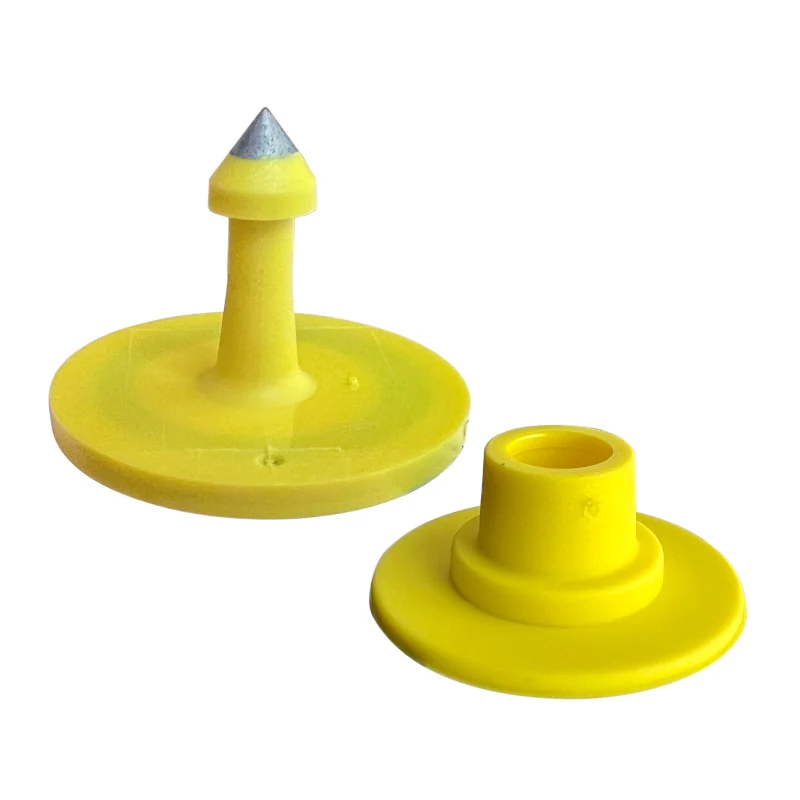
BLUEWORTH's UHF FDX-B 860–960 MHz RFID ear tag (840-numbered) is designed for this kind of high-throughput beef operation, meeting both ISO 18000-6C and USDA program specifications in a single tag format.
Dairy Farm Use Cases: When LF Technology Holds Its Ground
Dairy operations read electronic ear tags for cattle in a fundamentally different context than feedlots do. Most dairy parlors use automated milking systems, feeding stations, or identification pedestals positioned very close to each cow's head—often within 30–60 cm. LF's shorter read range is not a limitation here; it's actually an asset, because LF readers are highly accurate at close range and less susceptible to cross-reading adjacent cows in stall configurations.
If you're running an established dairy with LF readers already installed in the parlor, voluntary milking system, or neck-collar transponder network, switching to UHF requires replacing readers and potentially rethinking antenna placement. The infrastructure investment isn't justified unless you're also adding sorting gates or pasture-scale tracking to your operation.
For dairy farms that do want automation upgrades beyond the parlor—pasture monitoring, automatic drafting gates, or integration with herd management software at the pen level—UHF becomes worth evaluating, particularly if you're starting from a new build or a major equipment refresh cycle.
Compatibility with Sorting Gates and Weighing Systems
Most modern livestock sorting gates and weigh-scale platforms sold in North America and Europe offer dual-technology reader options that support both LF and UHF electronic cattle tags, or upgradeable to do so. However, older single-technology setups are still common on operations that haven't updated equipment in the last decade.
Before specifying tag type for a large order, verify three things with your equipment supplier:
- What RFID frequency does your existing chute reader, drafting gate, or scale head support?
- Does your herd management software integrate with both ISO standards, or only one?
- Are the antennas positioned for the read range of the tag technology you plan to use?
UHF tags read through the air more efficiently but are more sensitive to antenna positioning and to proximity to water or animal tissue. For permanent portal installations in beef feedlot settings, this is manageable through proper antenna placement. BLUEWORTH's UHF RFID TPU Cow Tags use a TPU housing specifically chosen for improved signal performance in livestock environments where animal body mass and moisture can degrade read rates.
Selection Checklist: Choosing the Right Electronic Ear Tags for Your Operation
If you're evaluating electronic ear tags for cattle as a bulk buyer—whether as a farm operator, a distributor supplying multiple accounts, or an integrator specifying electronic cattle tags for a system build—this table provides a starting framework:
| Decision Factor | Choose LF if… | Choose UHF if… |
|---|---|---|
| Reader infrastructure | Existing LF readers installed; no replacement budget | New build or equipment refresh planned |
| Operation type | Dairy parlor; close-proximity milking or feeding systems | Beef feedlot, cow-calf, backgrounder; high-throughput chute or gate |
| Herd size / throughput | Smaller herds; sequential reading is acceptable | Large herds; sorting 100+ head per session benefits from anti-collision read speed |
| Compliance requirement | Existing LF 840 tags already meet APHIS requirements | New tag order can use USDA-approved UHF 840 format to meet mandate |
| Budget priority | Minimize per-tag cost; reader already amortized | Accept higher tag cost in exchange for labor savings at sorting/weighing points |
| Future system integration | No plans to add gate drafting or pasture tracking | Planning to add automated sorting, pasture monitoring, or IoT data capture |
Final Consideration: Technology vs. Supply Chain Reliability
For large-volume buyers, the comparison between UHF and LF electronic ear tags for cattle doesn't end at specs. Batch-to-batch consistency, chip bonding quality, and housing material durability matter just as much over a multi-year supply relationship when sourcing electronic cattle tags at scale. Working with a factory-direct manufacturer—rather than through a reseller chain—gives buyers a shorter path to quality resolution if an issue emerges, along with volume pricing that scales as operation size grows.
Both technologies are viable choices for modern cattle operations. Whether you choose UHF or LF electronic cattle tags, the decision comes down to your current infrastructure, your throughput requirements, and where you want your identification system to be in three to five years.