EN
EN

Electric Ear Tag Applicator Procurement Guide for Livestock Farms
Buying an electric ear tag applicator is not simply a tool purchase. For a livestock operation, it affects how reliably animals enter the identification workflow, how consistently staff work through a tagging day, and how easily records can be checked later with an rfid scanner device. This guide helps farm managers, distributors, and procurement teams evaluate electric applicators without confusing the application tool with the reader used to scan electronic IDs.
Start by separating the applicator from the RFID workflow
An electric ear tag applicator places the tag in the animal’s ear. An rfid scanner device reads the electronic identifier after tagging. They are connected in the workflow, but they are not the same piece of equipment. This distinction matters when purchasing livestock tags for traceability, breeding records, treatment histories, or movement management.
For electronic animal identification, farms should confirm the RFID tag format and reader protocol independently. ISO 11784 defines electronic animal-identification codes, while ISO 11785 addresses the transmission protocol. The applicator decision is mechanical: it must work with the selected tag construction, pin or needle arrangement, and expected daily throughput. The scanner decision is electronic: it must read the tag technology used by the farm or supply chain.
Making this separation early prevents a common receiving problem: a team approves compatible livestock tags and an rfid scanner device, then finds that the applicator pin, tag neck, or placement fixture does not match the tag set.
Confirm voltage, plug, and charging requirements before ordering
Power configuration should be a purchase-order item, not a detail left for delivery day. Check the farm’s power supply, the destination market, supplied charger type, battery replacement process, and availability of spare charging components. If multiple sites operate across regions, record the plug standard for each destination rather than assuming one configuration can serve all locations.
The matched product in this procurement context is described as a 110V electric ear tag applicator with a USA-standard plug for one-piece and two-piece type tagging. That is useful for a North American power environment, but buyers should still confirm the delivered configuration, charger, and tag setup against their own order. Do not treat a product title as proof of compatibility with every tag family or every electrical system.
- Specify voltage and plug standard on the purchase order.
- Ask whether the unit uses a battery, mains power, or a charger-and-battery combination.
- Plan for charging time, shift coverage, and a backup unit during peak tagging windows.
- Confirm what spare parts can be stocked locally or shipped with the first order.
Match the applicator to your livestock tags—not just the species
Cattle, sheep, goats, and pigs may all use ear identification, but species is only the starting point. The correct electric tool depends on whether your livestock tags are one-piece or two-piece, the male and female component geometry, the pin or needle arrangement, and the manufacturer’s recommended placement method. A tool that fits one visual tag can be unsuitable for an electronic tag even when both are used on the same farm.
Build a simple compatibility sheet before requesting quotes. Include tag brand or drawing, component type, neck size, target animal group, electronic or visual function, and required quantity. Send the sample or specifications to the supplier and request confirmation in writing. For a new tag program, run a small pilot before a full herd rollout.
| What to verify | Why it matters | Procurement evidence |
|---|---|---|
| One-piece or two-piece tag construction | Determines the mechanical fit of the applicator | Tag drawing, sample, or approved compatibility statement |
| Pin/needle interface | Affects tag placement and serviceability | Part number and spare-pin list |
| Electronic tag and reader format | Ensures the rfid scanner device can read the ID after application | Tag specification and reader test result |
| Animal group and handling setup | Guides ergonomics and batch-workflow choices | Pilot plan for calves, mature cattle, sheep, goats, or pigs |
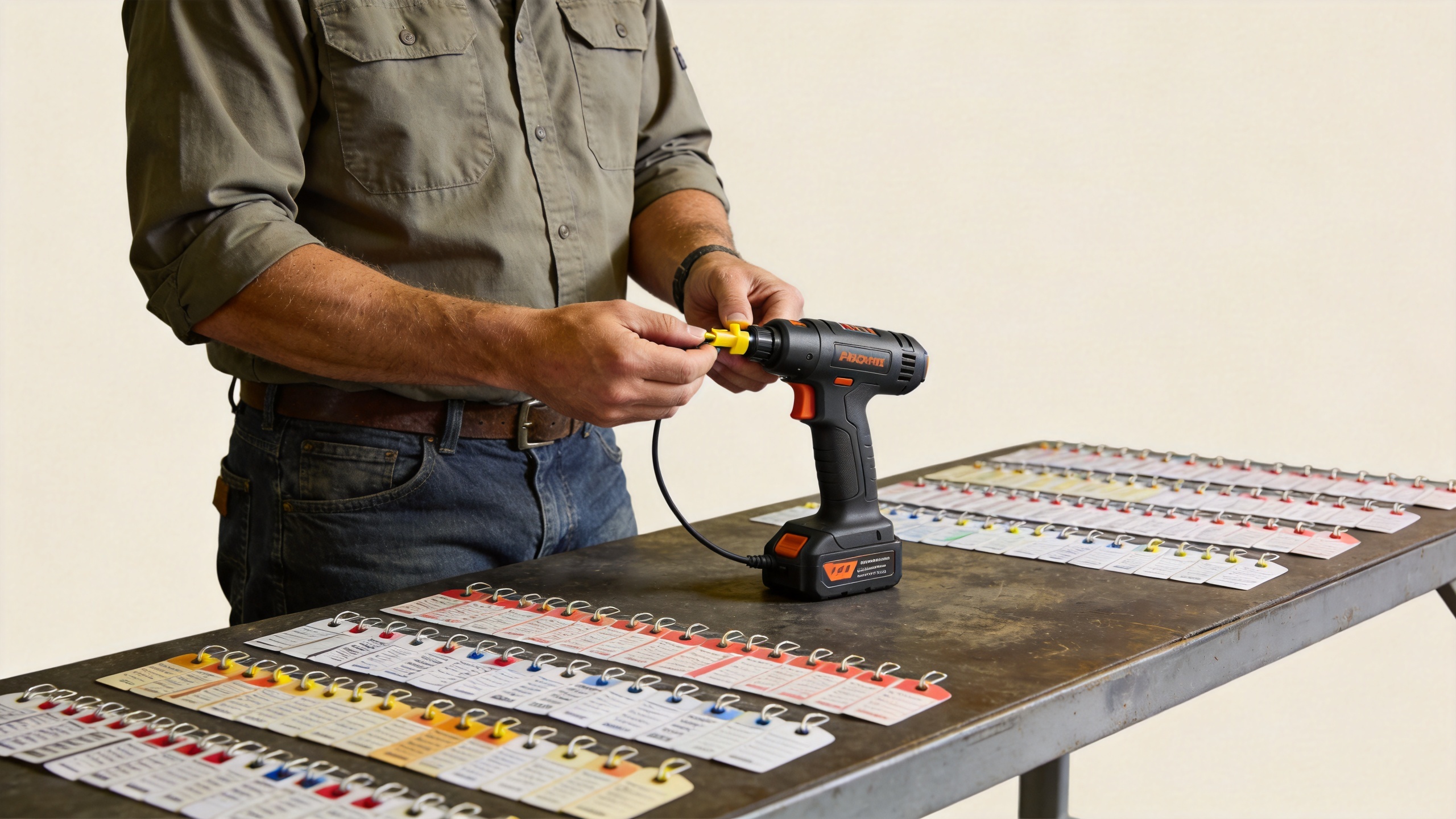
Plan for batch operations and operator consistency
Electric assistance can reduce repetitive manual effort, but the procurement goal is consistent application rather than speed alone. Review how animals move through the race, chute, or handling area; how tags are staged; where the rfid scanner device is used; and who records exceptions. A workable setup helps trained staff keep tag identity, animal identity, and tag placement aligned throughout the session.
During a pilot, track practical indicators: missed placements, rework, pauses for adjustments, battery changes, operator comfort, and whether tag IDs can be scanned immediately after application. These observations give buyers more useful evidence than a generic claim about daily capacity. They also reveal whether the farm needs a second tool, additional pins, or a different staging method for livestock tags.
Evaluate the supplier as part of the tool decision
Decision-stage procurement should consider the supplier’s ability to support the first shipment and the next production cycle. Ask for a clear quotation, product configuration, spare-part options, packaging details, lead time, and the process for handling a compatibility issue. Factory-direct sourcing can simplify communication and may support volume pricing, but it does not replace a documented approval process.
For farms and distributors buying at scale, request a pre-shipment check using the chosen tag samples. If the tagging program uses electronic identification, include a post-application scan with the farm’s rfid scanner device in the acceptance test. That single test validates the mechanical and digital handoff without incorrectly assuming the applicator itself performs RFID reading.
A practical electric ear tag applicator buying checklist
- Define the animal groups and the number of livestock tags required per session.
- Identify whether tags are visual, electronic, or both, and document the selected tag construction.
- Confirm the rfid scanner device and tag format separately from the applicator.
- Specify voltage, plug type, charger, and destination market in the order.
- Verify applicator compatibility with one-piece or two-piece tags using samples or drawings.
- Request information on pins, replacement parts, training, and after-sales handling.
- Conduct a small receiving or farm pilot before committing the full tagging plan.
- Document the acceptance test: correct placement, retained tag, readable ID, and recorded animal data.
Make the purchase fit the whole identification system
An electric ear tag applicator should be selected as one component of a complete livestock-identification workflow. When voltage, tag geometry, batch handling, and scanner compatibility are verified in advance, farms can reduce avoidable rework and start each tagging program with a clearer operating plan. Use the product specification as a starting point, confirm the final configuration with the supplier, and test the exact combination of applicator, livestock tags, and rfid scanner device that your operation will use.