EN
EN

Automatic Cat Water Fountain vs. Standard Water Bowl: Key Differences
Choosing between an automatic cat water fountain and a standard water bowl is less about buying the newest pet accessory and more about matching a drinking setup to your cat, home routine, and willingness to clean. A bowl is simple, quiet, and dependable. A cat drinking fountain adds moving water, circulation, and often filtration—but it also adds parts, power considerations, and regular maintenance.
For many cats, either option can work well when the water is fresh and the vessel is kept clean. The useful question is: which setup makes it easiest for your household to keep water appealing and available every day?
At a glance: fountain versus water bowl
| Decision factor | Automatic cat water fountain | Standard water bowl |
|---|---|---|
| Water movement | Circulates water continuously or on a schedule | Still water |
| Daily routine | May reduce refill frequency with a larger reservoir | Usually easy to refill and monitor at a glance |
| Cleaning | Needs disassembly, pump cleaning, and filter care | Usually fastest to wash and replace |
| Noise and power | May create a soft pump sound and needs charging or power | Silent and does not need power |
| Suitable fit | Cats interested in moving water; multi-cat or busy homes | Low-maintenance homes; cats comfortable with still water |
This comparison is not a rule that every cat needs an automatic cat water fountain. If your cat drinks normally from a clean bowl, a bowl remains a practical solution. If your cat shows more interest in running taps or tends to ignore still water, a fountain can be worth testing.
How the drinking experience changes
A standard bowl presents water in its simplest form. The surface is still, the water level is easy to see, and the cat can drink without a motor or stream. This makes bowls particularly useful for cautious cats, cats that dislike unfamiliar noises, and homes that need a backup water source during travel or outages.
An automatic cat water fountain changes the cue rather than magically solving hydration. The stream, ripple, or falling-water surface may attract cats that are curious about movement. The key word is may: some cats enjoy it immediately, while others prefer a wide, quiet bowl. Before investing heavily, notice where your cat already chooses to drink and whether they react calmly to a low mechanical sound.
For a household comparing options, put the fountain in a calm area away from food, litter, and busy foot traffic. Keep a clean bowl available during the transition. That gives your cat a choice and gives you a simple way to see whether the new setup is actually used.
Freshness, filtration, and what they do not replace
Most fountain designs keep water moving through a pump, and many include a filter. Circulation can keep the surface from looking stagnant, while filters may help catch hair and debris. Those are meaningful convenience features, especially in a home with several pets, but they do not make cleaning optional.
One general maintenance reference recommends replacing water daily, cleaning the fountain weekly, and changing filters every two to four weeks. Treat that as a starting point rather than a universal schedule: water quality, number of pets, room temperature, and the manufacturer’s instructions all matter. If you see slime, debris, reduced flow, or an odor, clean the unit sooner.
A bowl has no filter and no pump, but the same core principle applies: refresh it often and wash it thoroughly. The advantage is visibility. You can quickly see when a bowl is empty or dirty. The tradeoff is that a small bowl can collect hair and dust and may need refilling more often.
Maintenance is the deciding tradeoff for many homes
Before you compare prices, ask yourself a more practical question: will you consistently take the fountain apart? A cat drinking fountain has a reservoir, pump, channels, and sometimes a filter housing. Skipping the hidden parts is where the convenience can turn into extra work.
- Choose a fountain if you can commit to rinsing, wiping, and checking the pump on a routine.
- Choose a bowl if the simplest system is the one you are most likely to wash daily.
- For either option, keep the drinking vessel away from litter boxes and consider using multiple water stations in a multi-cat home.
You could argue that a fountain is automatically more hygienic because it filters water. That is only true when the unit is maintained. A neglected fountain can be harder to clean than a bowl; a clean bowl is better than a complicated device that has been ignored.
Capacity, power, and home routine
Capacity becomes more important in multi-cat homes, during warmer weather, or when your schedule makes frequent refills inconvenient. A larger reservoir can provide a useful buffer, but it should not replace daily observation. Check that every cat can reach the water comfortably and that the water level remains adequate.
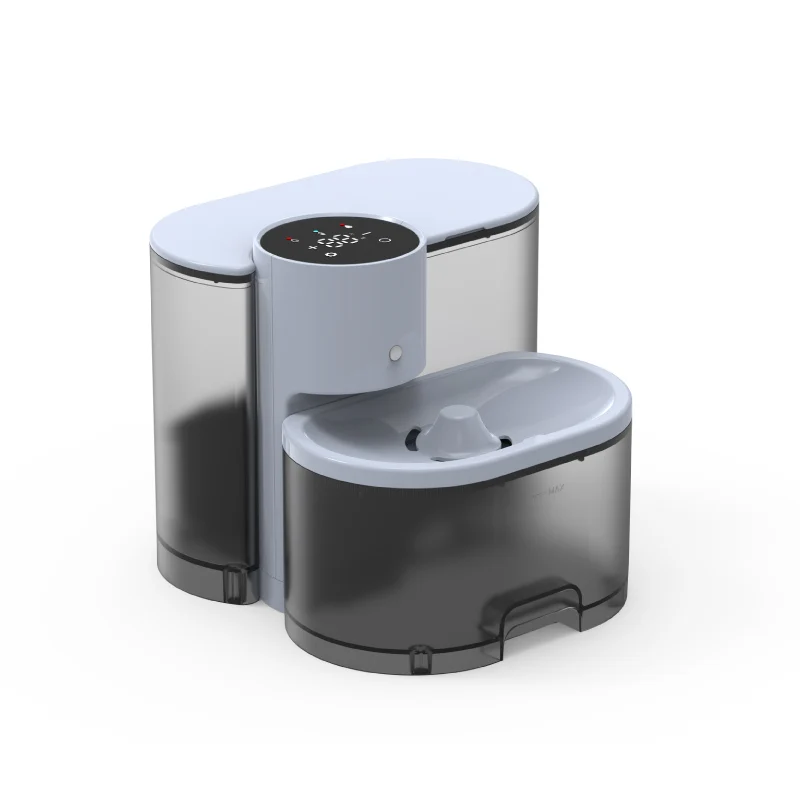
Some models add scheduling, displays, cordless operation, or quieter pump designs. For example, the 4L automatic pet water fountain with LCD display and time setting is a product example with a larger-capacity reservoir and timing controls. These features can help with routine management, but they should be evaluated alongside cleaning access, replacement-filter availability, and your cat’s comfort with the unit.
Keep a plain bowl as a backup even if you use an automatic cat water fountain. That simple redundancy is useful for travel, charging periods, cleaning days, or a cat that temporarily avoids the fountain.
Which option fits your cat?
A fountain may be a better fit when:
- Your cat repeatedly seeks running water or shows more interest in a moving stream.
- You have more than one cat and want a larger shared reservoir.
- You can maintain the pump, reservoir, and filters on schedule.
- Your cat is comfortable around a quiet mechanical sound.
A bowl may be a better fit when:
- Your cat drinks well from still water already.
- You want the fastest possible wash-and-refill routine.
- Your cat is noise-sensitive or wary of new devices.
- You need a portable, power-free solution for several locations around the home.
A practical choice, not a universal upgrade
An automatic cat water fountain is most useful when moving water and a larger reservoir help your cat drink more willingly or help your household sustain a better water routine. A standard bowl wins when simplicity makes daily cleaning more reliable. Neither choice is inherently superior for every cat.
Start with what you can maintain consistently. If you are evaluating a higher-capacity option, review the cleaning access and routine features of this automatic pet water fountain. Watch your cat’s preferences, and speak with a veterinarian if you notice a meaningful change in drinking behavior. The right setup is the one your cat uses comfortably and you can keep clean consistently.